
AOD-9604 vs 5-Amino-1MQ: Peptide Fragment vs NNMT Inhibitor
For laboratory research only. Not for human or animal use. This article gives no dosing, administration or therapeutic advice.
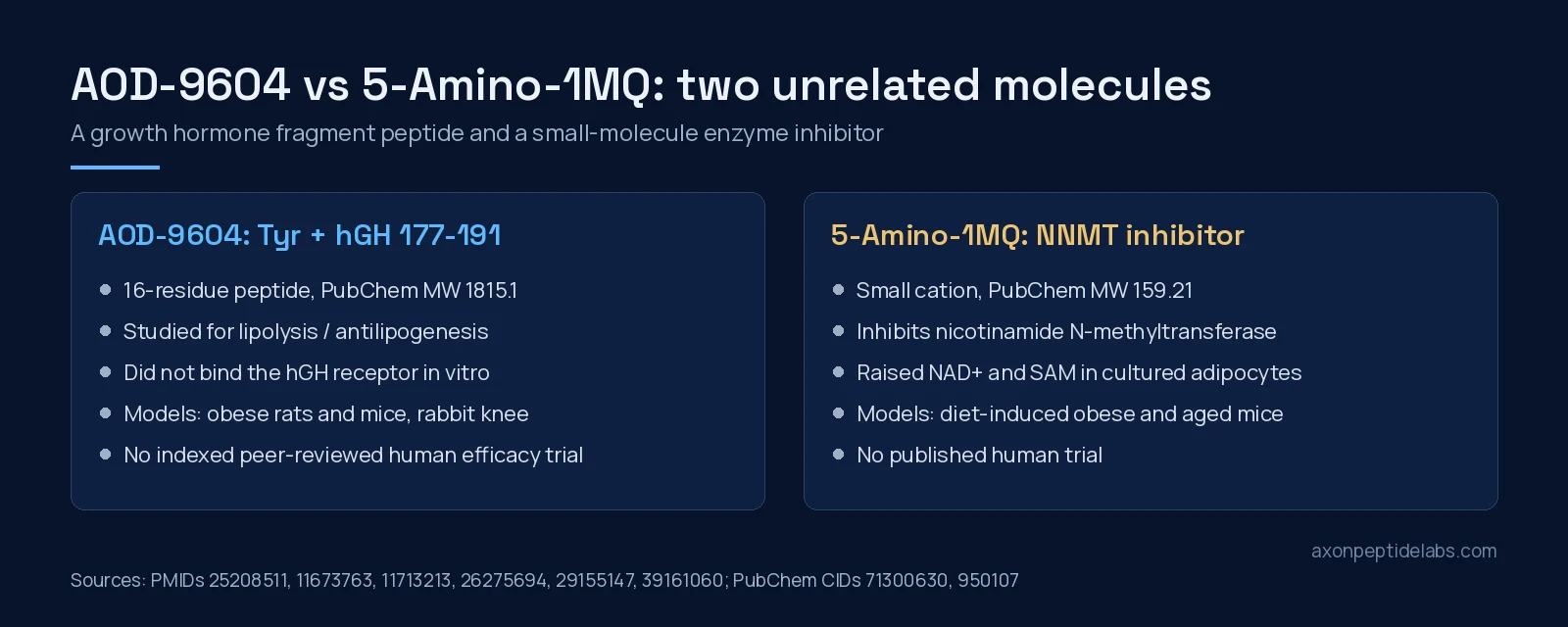
Short answer: AOD-9604 and 5-Amino-1MQ are often grouped as “metabolic research compounds”, but they are not the same kind of molecule and they do not share a mechanism. AOD-9604 is a 16-residue peptide: the C-terminal 177-191 fragment of human growth hormone with an extra tyrosine at the N-terminus.[1] 5-Amino-1MQ (5-amino-1-methylquinolinium) is a small-molecule inhibitor of the enzyme nicotinamide N-methyltransferase (NNMT), not a peptide at all.[2],[3] Both evidence bases are almost entirely animal and cell work, and neither has a peer-reviewed human efficacy trial indexed in PubMed.
Identity
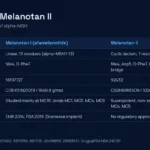
Values from PubChem compound records.
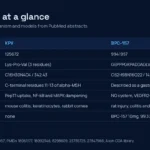
| Field | AOD-9604 | 5-Amino-1MQ |
|---|---|---|
| What it is | Peptide: Tyr + hGH residues 177-191[1] | Small molecule: methylquinolinium cation with a primary amine[4] |
| PubChem CID | 71300630 | 950107 |
| Formula (PubChem) | C78H123N23O23S2 | C10H11N2+ (cation only) |
| Molecular weight (PubChem) | 1815.1 g/mol | 159.21 g/mol (cation) |
| CAS (PubChem synonym) | 221231-10-3 | 685079-15-6 |
| Target | Not the hGH receptor; lipid-metabolism actions in adipose tissue[5] | NNMT enzyme[4] |
AOD-9604: the growth hormone fragment idea
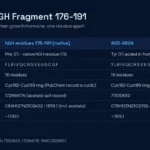
The starting point was older work on C-terminal fragments of hGH. In 1978, synthetic fragments containing residues 178-191 raised blood glucose and plasma insulin briefly and reduced insulin sensitivity in normal rats.[6] In 1993, the 177-191 fragment showed antilipogenic activity in rats equal to intact hGH, but no significant lipolytic effect on rat fat pads.[7] AOD-9604 adds a tyrosine to that fragment.
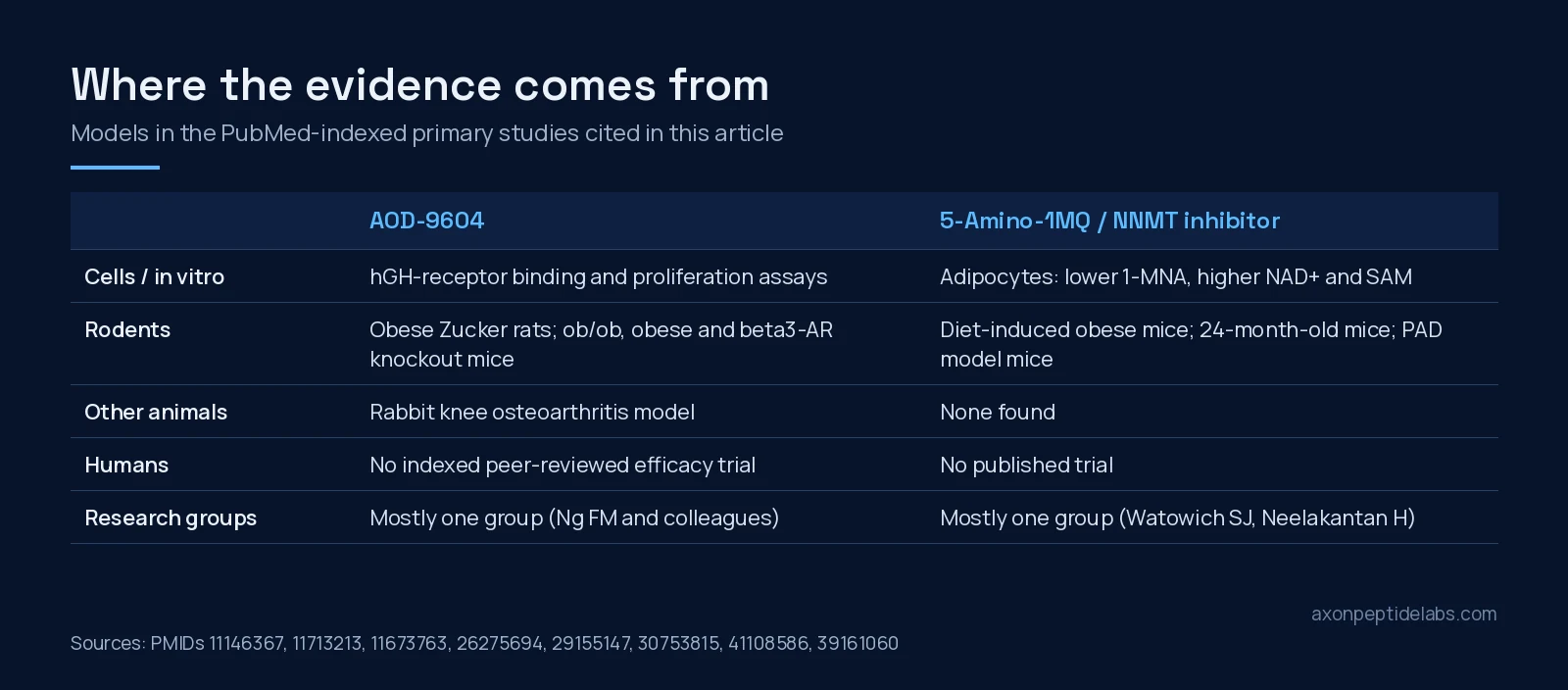
The AOD-9604 papers from 2000 and 2001 then reported effects in obese rodents. In obese Zucker rats, oral AOD-9604 reduced body-weight gain and increased lipolytic activity in adipose tissue, and, unlike chronic intact hGH, did not impair insulin sensitivity on euglycaemic clamp.[8] In obese ob/ob mice, both hGH and AOD-9604 reduced weight gain with higher fat oxidation and plasma glycerol; AOD-9604 did not cause hyperglycaemia, did not compete for the hGH receptor, and did not drive proliferation of hGH-receptor cells.[5] A third study linked the effects to beta3-adrenergic receptor expression, which both hGH and AOD-9604 restored in obese mice.[9]
Outside metabolism, a 2015 rabbit study tested AOD-9604 injected into knees with collagenase-induced osteoarthritis, alone and with hyaluronic acid, and scored cartilage degeneration and lameness.[10] It is one study in one animal model.
On the human side, a 2004 drug-development profile recorded phase IIa trials of AOD-9604 for obesity underway by February 2002.[11] We found no peer-reviewed report of human efficacy results for AOD-9604 in PubMed (search on October 1, 2026). A 2015 doping-control paper describes it as banned by the World Anti-Doping Agency and found on the internet and in confiscated vials, and developed a urine detection method with a stable serum metabolite.[1]
5-Amino-1MQ: inhibiting NNMT
NNMT methylates nicotinamide, a vitamin B3 form and NAD+ precursor, using S-adenosylmethionine (SAM) as the methyl donor. In 2014, a Nature study found NNMT expression raised in white adipose tissue and liver of obese and diabetic mice, and showed that knocking NNMT down in those tissues protected mice against diet-induced obesity by increasing cellular energy expenditure, with higher adipose SAM and NAD+ and increased polyamine flux.[12] That genetic result made the enzyme a drug target; the background on NAD+ itself is on our NAD+ research hub.
A structure-activity study then built a series of small-molecule NNMT inhibitors and mapped the binding-site features that drive inhibition.[13] The follow-up paper reported that methylquinolinium analogues with primary-amine substitutions crossed membranes well and were selective, not inhibiting related SAM-dependent methyltransferases or NAD+ salvage enzymes. In cultured adipocytes they lowered the reaction product 1-methylnicotinamide, raised NAD+ and SAM and suppressed lipogenesis; in diet-induced obese mice, a potent inhibitor reduced body weight, white fat mass and adipocyte size and lowered plasma cholesterol.[4]
Later mouse studies extended this. In diet-induced obese mice switched to a lean diet, adding the inhibitor normalised body composition and liver fat to lean-control levels faster than the diet switch alone[14], and the companion microbiome study names the compound as 5-amino-1-methylquinolinium.[2] A 2024 study of 5A1MQ in diet-induced obese mice reported dose-dependent limits on weight and fat gain, better glucose tolerance and insulin sensitivity, reduced hepatic steatosis, and measured its pharmacokinetics and tissue distribution.[3] In 24-month-old mice with an acute muscle injury, inhibitor treatment increased muscle stem cell proliferation and fibre size during regeneration[15], and a 2024 study in aged mice reported grip-strength gains that added to those from exercise.[16]
A note on naming: several of these papers describe the compound only as “NNMTi”, a methylquinolinium inhibitor from the same programme. The abstracts that name 5-amino-1-methylquinolinium (5A1MQ) explicitly are the 2022 microbiome study and the 2024 obesity study.[2],[3]
Side-by-side comparison
| Question | AOD-9604 | 5-Amino-1MQ |
|---|---|---|
| Molecule type | Peptide fragment of hGH (16 residues)[1] | Small-molecule quinolinium[4] |
| Proposed mechanism | Lipolytic/antilipogenic actions in fat tissue, linked to beta3-AR expression but not mediated directly through it[9] | NNMT inhibition, raising cellular NAD+ and SAM[4],[12] |
| Acts on GH receptor? | No binding or proliferation in hGH-receptor cells[5] | Not applicable |
| Main models | Obese Zucker rats; ob/ob and knockout mice; rabbit knee[8],[10] | Diet-induced obese mice; aged mice; adipocytes[4],[15] |
| Food intake in obese mice | Not the focus of the cited abstracts | No effect on total food intake[4] |
| Human data (PubMed) | Phase IIa underway in 2002; no indexed results[11] | None published |
| Anti-doping status | WADA-banned[1] | Not addressed in the cited literature |
| COA on our COA page | None posted | None posted |
Null and contradictory results
- The parent fragment was not lipolytic. hGH 177-191 showed antilipogenic activity but no significant lipolytic effect in rat fat pads[7], while later AOD-9604 papers report increased lipolysis.[8] The molecules differ by one tyrosine and the methods differ, so the two findings are not directly comparable.
- Glucose effects of hGH fragments. Fragments containing residues 178-191 transiently raised blood glucose and reduced insulin sensitivity in rats[6], whereas AOD-9604 did not induce hyperglycaemia in obese mice.[5]
- Beta3-adrenergic knockout mice. Long-term AOD-9604 did not change body weight or increase lipolysis in beta3-AR knockout mice, although an acute dose still raised energy expenditure and fat oxidation; the authors concluded the effect is not mediated directly through beta3-AR.[9]
- NNMT inhibition and blood flow. In a mouse model of peripheral artery disease from an independent group, an NNMT inhibitor did not change limb perfusion recovery, capillary density, muscle mass or fibre size, while muscle strength and power improved.[17]
- Microbiome. Lean and obese control mice showed minimal microbiome differences and alpha diversity did not differ between groups in the 5-amino-1MQ microbiome study.[2]
Regulatory status
Neither compound is described as an approved medicine in the literature cited here. AOD-9604’s PubMed development record stops at phase IIa trials underway in 2002[11], and it appears in anti-doping literature as a WADA-banned substance.[1] A 2026 sports-medicine review groups AOD-9604 with peptides marketed directly to patients and notes that rigorous human safety data for unapproved peptides are scarce.[18] 5-Amino-1MQ has no published human trial. This article makes no statement about the legal status of either compound in Canada.
Documentation for these listings
No certificate is posted for AOD9604 5mg or for 5-Amino-1MQ 10mg on our COA page at the time of writing. Both sit in the metabolic research category. When a report is posted, the identity line is the one to check: an intact peptide mass near 1815 for AOD-9604, and for 5-Amino-1MQ a mass for the cation plus the named counter-ion. Researchers who buy lab-tested peptides in Canada can use the COA page to see which listings already carry a lot-specific report.
What the evidence does not show
- It does not show any effect of either compound in humans. No peer-reviewed human efficacy result is indexed for AOD-9604, and none exists for 5-Amino-1MQ.
- It does not show independent replication at scale. The AOD-9604 metabolic papers come largely from one group[8],[5],[9], and most NNMT-inhibitor papers come from another.[4],[15],[16]
- It does not show that the two compounds should be compared head to head, combined, or ranked: they have different targets and no study has tested them together.
- It does not show that “NNMTi” results in the earlier papers apply to every material sold as 5-Amino-1MQ; identity and salt form have to be confirmed lot by lot.
- It does not show that cartilage findings in one rabbit study, or muscle findings in aged mice, translate to people.[10],[15]
Frequently asked questions
Is 5-Amino-1MQ a peptide?
No. It is a small-molecule methylquinolinium cation (PubChem CID 950107, 159.21 g/mol) that inhibits the enzyme NNMT. AOD-9604 is a 16-residue peptide derived from human growth hormone.
How does AOD-9604 differ from growth hormone?
AOD-9604 is Tyr plus hGH residues 177-191. In mouse and cell studies it did not bind the hGH receptor or drive hGH-receptor cell proliferation, and did not induce hyperglycaemia, unlike intact hGH.
What does NNMT inhibition do in the studies?
In cultured adipocytes, NNMT inhibitors lowered 1-methylnicotinamide and raised NAD+ and SAM. In diet-induced obese mice they reduced fat mass without changing total food intake. These are mouse and cell findings.
Has either compound been tested in human trials?
AOD-9604 entered phase IIa obesity trials by 2002, but no peer-reviewed human efficacy results are indexed in PubMed. No human trial of 5-Amino-1MQ has been published.
Do Axon’s AOD-9604 and 5-Amino-1MQ listings have a COA?
No certificate is posted for AOD9604 5mg or 5-Amino-1MQ 10mg on the Axon COA page at the time of writing.
References
- Cox HD, Smeal SJ, Hughes CM et al. (2015). Detection and in vitro metabolism of AOD9604. Drug Test Anal. PMID: 25208511. doi: 10.1002/dta.1715.
- Dimet-Wiley A, Wu Q, Wiley JT et al. (2022). Reduced calorie diet combined with NNMT inhibition establishes a distinct microbiome in DIO mice. Sci Rep. PMID: 35013352. doi: 10.1038/s41598-021-03670-5.
- Babula JJ, Bui D, Stevenson HL et al. (2024). Nicotinamide N-methyltransferase inhibition mitigates obesity-related metabolic dysfunction. Diabetes Obes Metab. PMID: 39161060. doi: 10.1111/dom.15879.
- Neelakantan H, Vance V, Wetzel MD et al. (2018). Selective and membrane-permeable small molecule inhibitors of nicotinamide N-methyltransferase reverse high fat diet-induced obesity in mice. Biochem Pharmacol. PMID: 29155147. doi: 10.1016/j.bcp.2017.11.007.
- Heffernan MA, Thorburn AW, Fam B et al. (2001). Increase of fat oxidation and weight loss in obese mice caused by chronic treatment with human growth hormone or a modified C-terminal fragment. Int J Obes Relat Metab Disord. PMID: 11673763. doi: 10.1038/sj.ijo.0801740.
- Ng FM, Bornstein J (1978). Hyperglycemic action of synthetic C-terminal fragments of human growth hormone. Am J Physiol. PMID: 645904. doi: 10.1152/ajpendo.1978.234.5.E521.
- Wu Z, Ng FM (1993). Antilipogenic action of synthetic C-terminal sequence 177-191 of human growth hormone. Biochem Mol Biol Int. PMID: 8358331.
- Ng FM, Sun J, Sharma L et al. (2000). Metabolic studies of a synthetic lipolytic domain (AOD9604) of human growth hormone. Horm Res. PMID: 11146367. doi: 10.1159/000053183.
- Heffernan M, Summers RJ, Thorburn A et al. (2001). The effects of human GH and its lipolytic fragment (AOD9604) on lipid metabolism following chronic treatment in obese mice and beta(3)-AR knock-out mice. Endocrinology. PMID: 11713213. doi: 10.1210/endo.142.12.8522.
- Kwon DR, Park GY (2015). Effect of Intra-articular Injection of AOD9604 with or without Hyaluronic Acid in Rabbit Osteoarthritis Model. Ann Clin Lab Sci. PMID: 26275694.
- Wilding J (2004). AOD-9604 Metabolic. Curr Opin Investig Drugs. PMID: 15134286.
- Kraus D, Yang Q, Kong D et al. (2014). Nicotinamide N-methyltransferase knockdown protects against diet-induced obesity. Nature. PMID: 24717514. doi: 10.1038/nature13198.
- Neelakantan H, Wang HY, Vance V et al. (2017). Structure-Activity Relationship for Small Molecule Inhibitors of Nicotinamide N-Methyltransferase. J Med Chem. PMID: 28548833. doi: 10.1021/acs.jmedchem.7b00389.
- Sampson CM, Dimet AL, Neelakantan H et al. (2021). Combined nicotinamide N-methyltransferase inhibition and reduced-calorie diet normalizes body composition and enhances metabolic benefits in obese mice. Sci Rep. PMID: 33707534. doi: 10.1038/s41598-021-85051-6.
- Neelakantan H, Brightwell CR, Graber TG et al. (2019). Small molecule nicotinamide N-methyltransferase inhibitor activates senescent muscle stem cells and improves regenerative capacity of aged skeletal muscle. Biochem Pharmacol. PMID: 30753815. doi: 10.1016/j.bcp.2019.02.008.
- Dimet-Wiley AL, Latham CM, Brightwell CR et al. (2024). Nicotinamide N-methyltransferase inhibition mimics and boosts exercise-mediated improvements in muscle function in aged mice. Sci Rep. PMID: 38969654. doi: 10.1038/s41598-024-66034-9.
- Dong G, Choi J, Li Y et al. (2025). Nicotinamide N-methyltransferase inhibition improves limb function in experimental peripheral artery disease. Physiol Rep. PMID: 41108586. doi: 10.14814/phy2.70615.
- Mendias CL, Awan TM (2026). Safety and Efficacy of Approved and Unapproved Peptide Therapies for Musculoskeletal Injuries and Athletic Performance. Sports Med. PMID: 41966639. doi: 10.1007/s40279-026-02437-0.