
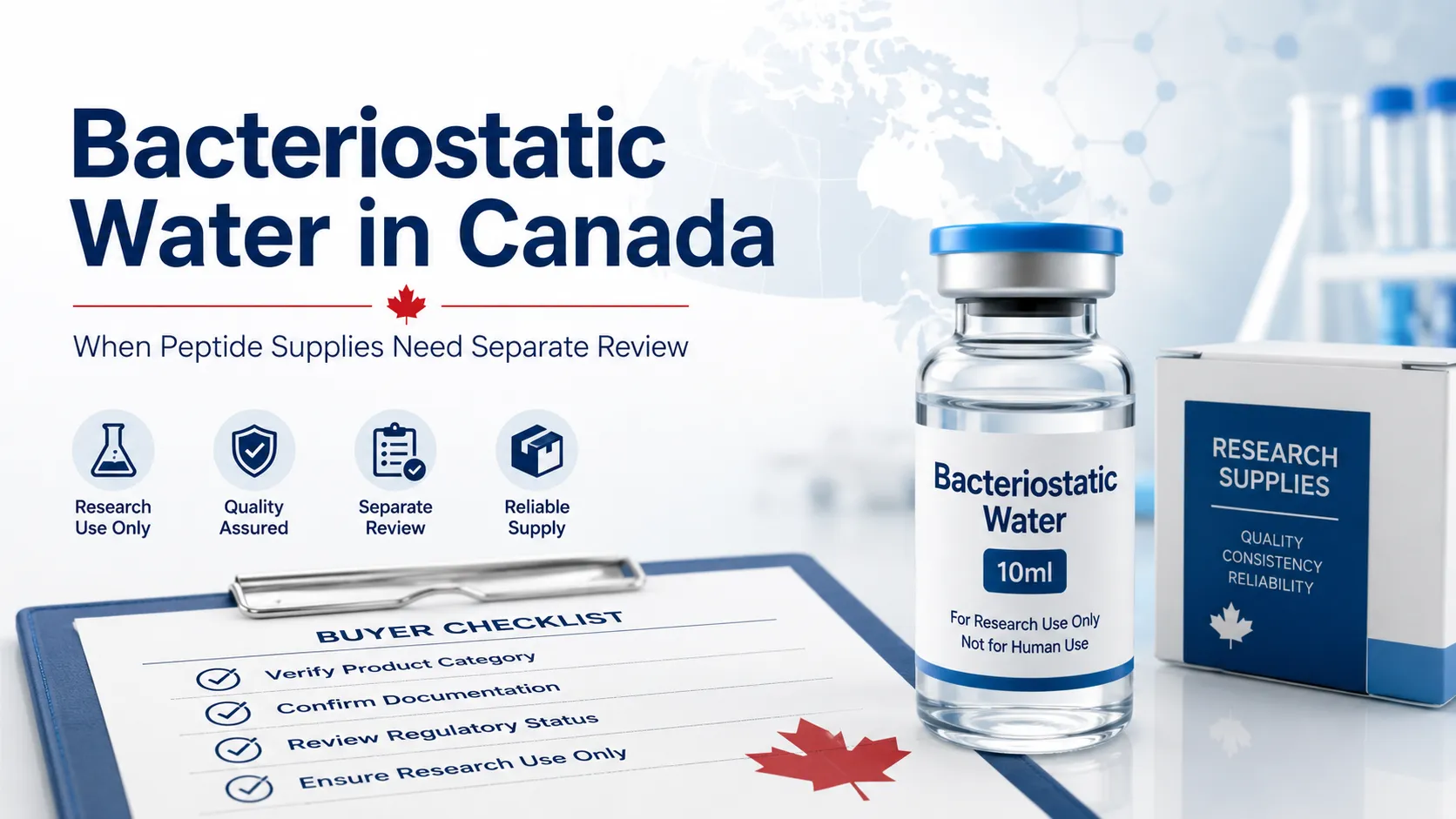
Bacteriostatic Water in Canada: When Peptide Supplies Need Separate Review
Quick answer: Bacteriostatic water is sterile water containing a small amount of benzyl alcohol (about 0.9%) as a preservative, which lets it be used more than once before it should be discarded. When sourcing peptide supplies, it’s worth reviewing separately from the peptides themselves — supplies have their own storage, expiry, and quality considerations that a peptide COA doesn’t cover.
When people focus on peptide quality, the supporting supplies often get overlooked. But the diluents, vials, and consumables matter too — and they need their own review, because the documentation and standards that apply to a peptide don’t automatically apply to the supplies around it. Bacteriostatic water is a good example.
What bacteriostatic water is
Bacteriostatic water is sterile water with a preservative added — typically benzyl alcohol at around 0.9%. The preservative is what makes it “bacteriostatic”: it inhibits the growth of bacteria, which is why the water can be accessed multiple times over a limited period rather than being single-use.
This is its defining feature. Plain sterile water has no preservative, so once opened it’s meant for immediate single use. The preservative in bacteriostatic water is what extends its usable window after opening.
Bacteriostatic vs. sterile water
The two are easy to confuse but differ in an important way:
| Bacteriostatic water | Sterile water | |
|---|---|---|
| Preservative | Yes (benzyl alcohol ~0.9%) | None |
| Reuse after opening | Yes, within a limited window | No — single use |
| Typical shelf life after opening | Commonly cited as around 28 days | Use immediately |
The “around 28 days after opening” figure is a widely cited convention rather than an absolute rule — always follow the specific product’s stated guidance, since formulations and manufacturer instructions vary.
Why supplies need separate review
Here’s the core point of this article: a peptide’s Certificate of Analysis tells you about the peptide. It tells you nothing about the water, the vial, or anything else in the order. Those need their own check.
Things to review for supplies specifically:
- Expiry and shelf life — both unopened and the window after opening
- Sterility and packaging integrity — sealed, undamaged, appropriate packaging
- Product specifics — volume, preservative type and concentration, intended use labeling
- Storage requirements — which may differ from the peptides they accompany
It’s easy to vet a peptide carefully and then pay no attention to the diluent, but a problem with a supply can undermine careful sourcing elsewhere. The peptide supplies category is worth reviewing with the same scrutiny you’d give a product page — and a 10ml bacteriostatic water listing should still show clear volume, preservative, and handling information.
General handling and storage
A few general handling points (these are storage considerations, not usage instructions — follow the specific product guidance and any applicable protocols):
- Store according to the product’s stated conditions, typically cool and out of direct light
- Note the date of first access, since the post-opening window is what governs usable life
- Keep the seal and packaging intact until use
- Discard according to the product’s stated window rather than relying on appearance
For how supplies ship and what to expect on delivery, the shipping policy covers handling and packaging, and the FAQ addresses common supply questions.
A quick supply-review checklist
| Check | What to confirm |
|---|---|
| Type | Bacteriostatic (preserved) vs. sterile (single-use) |
| Volume | Matches what’s listed (e.g., 10ml) |
| Preservative | Type and concentration stated |
| Expiry | Unopened shelf life and post-opening window |
| Packaging | Sealed, sterile, undamaged |
| Storage | Conditions clearly stated |
You can review supplies alongside products in the shop when planning an order, so everything’s checked together rather than as an afterthought.
Frequently asked questions
What is bacteriostatic water?
Sterile water containing a preservative (typically benzyl alcohol ~0.9%) that inhibits bacterial growth, allowing it to be accessed multiple times within a limited window rather than being single-use.
How is it different from sterile water?
Sterile water has no preservative and is single-use once opened; bacteriostatic water’s preservative gives it a usable window after opening, commonly cited as around 28 days.
Why review supplies separately from peptides?
A peptide’s COA covers the peptide, not the diluent or other supplies. Supplies have their own expiry, sterility, and storage considerations that need a separate check.
How long does bacteriostatic water last after opening?
A commonly cited convention is around 28 days, but always follow the specific product’s stated guidance, as this varies.
How should it be stored?
Per the product’s stated conditions — typically cool and out of direct light, with the post-opening window tracked from first access.